

The brightest take on this week’s science
Welcome, science-lovers!
This week, scientists got closer to understanding why some people are mosquito magnets.
Plus, new images bring us closer to the Sun than ever before…
Also in this issue:
🦠 Specific bacteria are linked to the immune system ‘farm effect’
🤯 A mind-blowing science fact
🔬 A microscope mystery
Let’s see where the science takes us!
YOU’RE NOT IMAGINING IT
Some People Really Are More Attractive to Mosquitoes, Study Shows
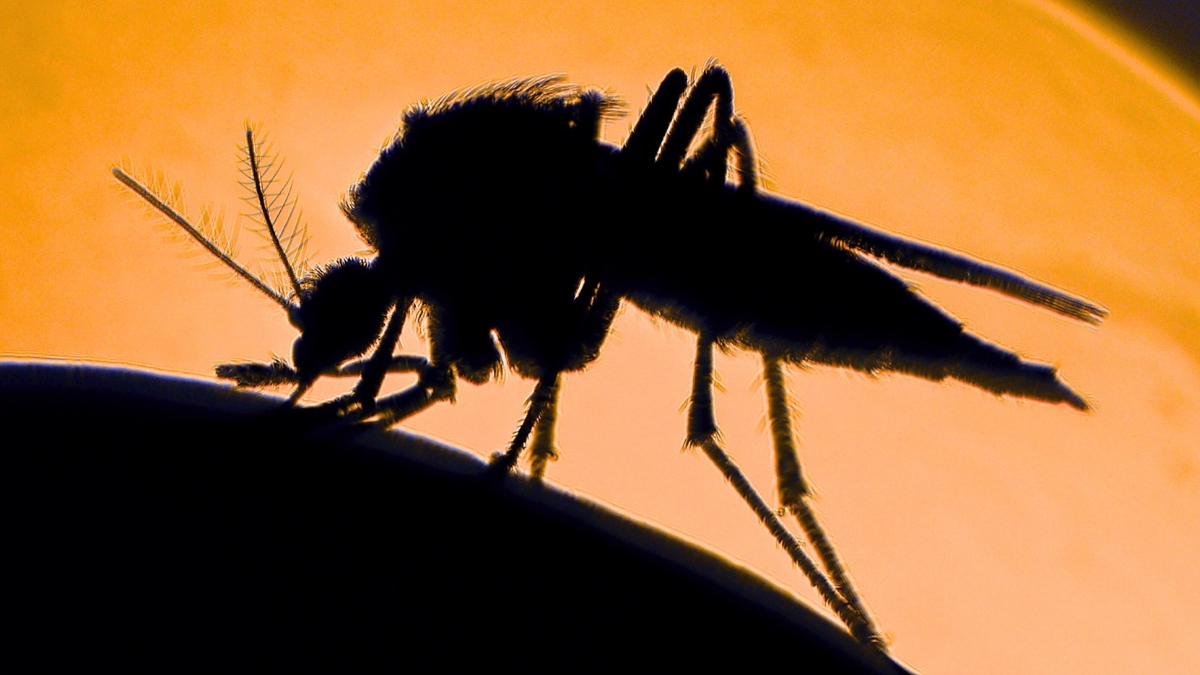
We’re feeling itchy just thinking about it. (LWA/Getty Images)
For many of us, mosquitoes are mostly a source of irritation and annoyance – and if that's all they are to you, you might count yourself lucky.
It's estimated that over 1 million human deaths result from mosquito bites every year, so understanding why and how mosquitoes seek us out is a hugely important field of science.
Thanks to researchers in Florida, we just got a step closer to figuring out why mosquitoes seem to be strangely more attracted to some people, while ignoring others.
HEADLINES
This Week in Science
Tell Google you want more Science
Google now allows you to favor science news as a preferred source of information. One tap on CHOOSE SCIENCE and you make sure ScienceAlert is in your news feeds and used as a source for AI.
LOOK OUT
There's One Predator That Terrifies Bears And Mountain Lions Alike

(Cris Cantón/Moment/Getty Images)
The wilds of North America can be a hazardous place.
It's there that some of the most intimidating predators make their home.
Black and brown bears that could eviscerate a person with one swipe of a mighty paw.
Mountain lions that stalk almost silently on padded feet.
Many hikers will gird themselves against the possibility of an attack from one of these feared beasts – but, as two new papers explain, there's an animal out there that even the most formidable predators will try to avoid.
Sponsored by

Stop Paying for 6 Tools. One AI Does It All

Most e-commerce sellers are running their store across 6 to 8 separate tools — and paying hundreds of dollars a month for the privilege. StoreClaw replaces your entire stack with one autonomous AI engine that monitors competitors, optimizes listings, automates marketing, and tracks real profit across Shopify, Amazon, and beyond.
It doesn't wait for you to ask. It runs 24/7 in the background, so you wake up to a full dashboard instead of a list of things you forgot to check.
Connect your store, and StoreClaw gets to work — no prompts, no complex setup, no six-app stack.
Free to start. No credit card required.
ZOOM ZONE
Microscope Mystery: What Do You See?

(USDA/Wikimedia Commons/Public Domain)
A) Snowflake
B) Seaweed
C) Microplastics
D) Fungal spores
Answer at the bottom.
LOOK IN
Scientists Isolate Bacteria Behind The ‘Farm Effect’

(Teerasak1988/iStock/Getty Images Plus)
For decades, scientists have theorized that kids actually need to get a bit dirty for their immune systems to develop fully.
This theory is supported by the fact that children who grow up on farms tend to have lower rates of asthma, allergies, and other immune issues than kids who live in cities.
They call this phenomenon ‘the farm effect’.
Now, researchers in Germany have found exactly which bacterial species mediate the farm effect in rural European children.
‘SIMPLY ASTONISHING’
Record-Breaking Images Reveal The Sun Is Teeming With Whirling Vortices
We’ve never seen our home star this close before 🤩
WOW FACTOR
Science Fact of The Week

(fhm/Moment/Getty Images)
Your bones and your brain are strange bedfellows, and scientists are only just beginning to realize how close-knit they are.
Bone cells can release hormones that cross the blood-brain barrier and impact cognitive function.
Whereas brain-derived hormones, like cortisol, can impact the health of our bones.
DOPAMINE HIT
Before You Go…
Enjoy a virtual nature bath….

(Gif by livingstills on Giphy)
Microscope answer: Fungal spores
This is a snapshot of how a fungus reproduces. The branching structures are called conidiophores, and the tiny round spores budding from their tips are called conidia.
That’s all for today… see you next week!
- Carly & Jess


