

The brightest take on this week’s science
Happy Halloween!
To celebrate this spooky season, we’ve cooked up a ‘monster mash’ of scientific scares, from glowing bats to blood-sucking cannibals.
You’ll also find:
🧠 A discovery on the brains of ‘superagers’
🎃 The worst junk food for your brain (and it’s not your Halloween candy)
🔬 A ghostly microscope image
Scroll if you dare…
LOOK OUT
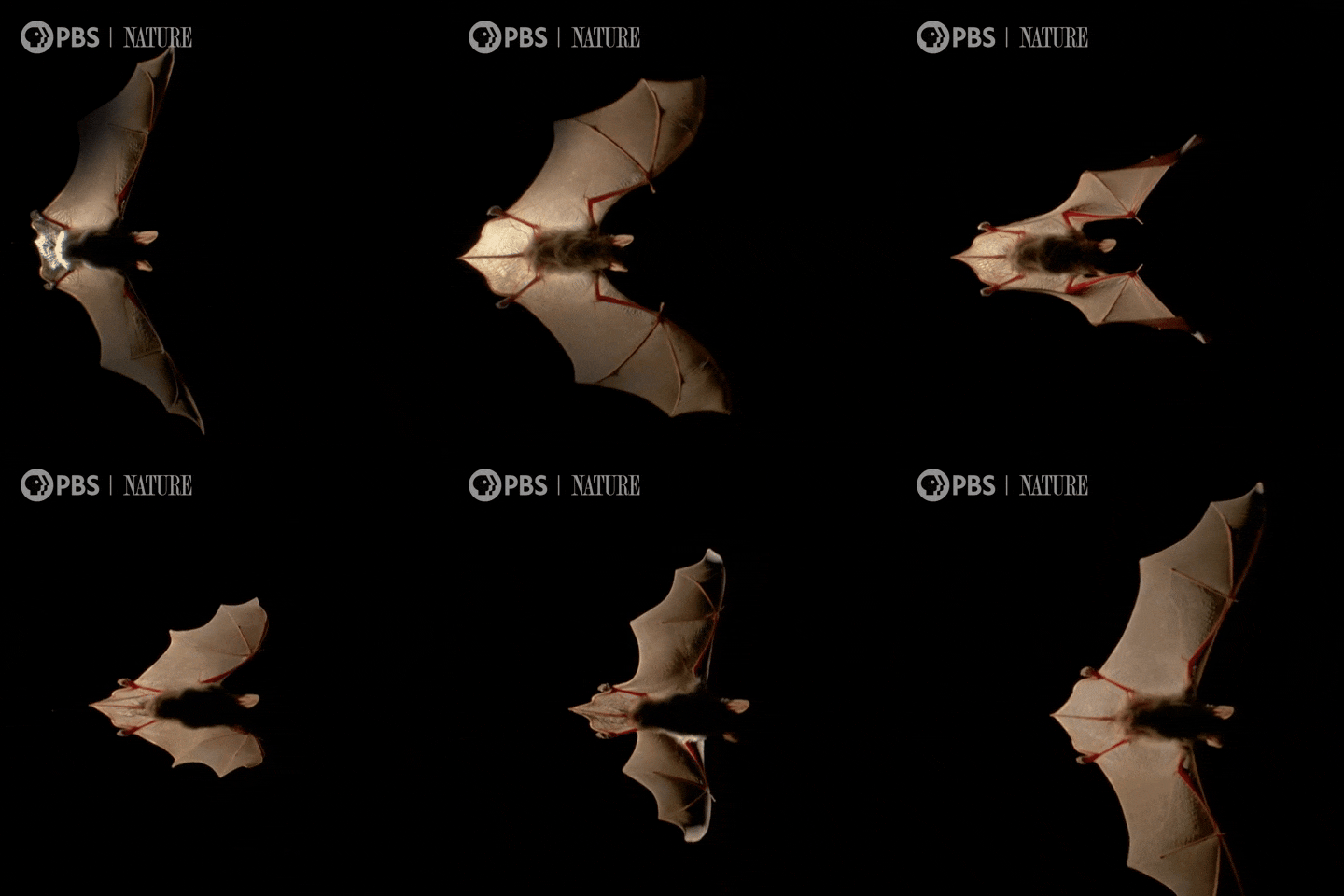
Scientists Discover Bats Glowing Green

(Rhododendrites/Wikimedia Commons/CC BY-SA 4.0/SA)
Glow-in-the-dark bats are more than just spooky Halloween decorations. They’re a feature of the natural world.
Just recently, scientists discovered that at least six bat species found in North America glow an eerie green under ultraviolet light.
Why this happens is a mystery to be solved.
Scientists aren’t even sure if there’s enough UV light in their natural environment to make the bats glow. So why do they?
In recent years, the number of mammals caught glowing has continued to grow.
The strange trait may have deep evolutionary roots…
HEADLINES
What Else We're Watching
🏅This week’s most read: 50-Year-Old Theory on Schizophrenia's 'Voices' Confirmed by Recent Study
LOOK OUT
Here’s the Worst Junk Food For The Brain

(Jennifer A Smith/Getty Images)
Scientists are investigating which junk foods are the worst for our brain health, and it’s not your Halloween candy.
Researchers tracked nearly 5,000 US residents aged 55 or older for seven years and found:
Those who consumed at least one serving of processed meats a day had a 17 percent higher risk of developing cognitive issues.
Those who drank sugary beverages had a 6 percent increased risk.
The positive news?
Sweets, including candy bars, were not significant predictors of risk.
You can now munch on your Halloween treats without that added dose of guilt.
ZOOM ZONE
Microscope Mystery: What Do You See?

(Samantha Yammine/CIRM)
A) Spider silk
B) Microfiber
C) Brain cells
D) Bone cells
Answer at the bottom.
LOOK IN
'Superager' Brains Defy Cognitive Decline

(Shane Collins/Northwestern University)
There are some among us who have incredible brains. Even in their 80s and beyond, their minds can stay as sharp as those of people in their 50s.
A 25-year study on superagers has now found some envious perks.
Compared to the general population, superager brains are oddly resistant to the plaques and tangles associated with Alzheimer’s disease.
Cells that deliver information to the hippocampus are also larger.
And some brain regions are thicker than those in much younger people.
If scientists can figure out what makes some brains age-defiant, it could help all of us live longer and healthier lives.
WOW FACTOR
Science Fact of The Week

Tardigrades are like the vampires of the microscopic world.
These ‘water bears’ have fearsome ‘fangs’ that can suck the life source right out of other organisms, including fellow tardigrades.
Like vampires, they’re also really difficult to kill. They can even survive blasts of radiation.
DOPAMINE HIT
Before You Go…
Have a happy Halloween!
Microscope answer: Brain cells.
These ghostly entities are astrocytes – star-shaped cells that support neurons. A single astrocyte in the human brain can communicate with up to 2 million synapses at a time.
That’s all for today… see you next week!
- Carly


